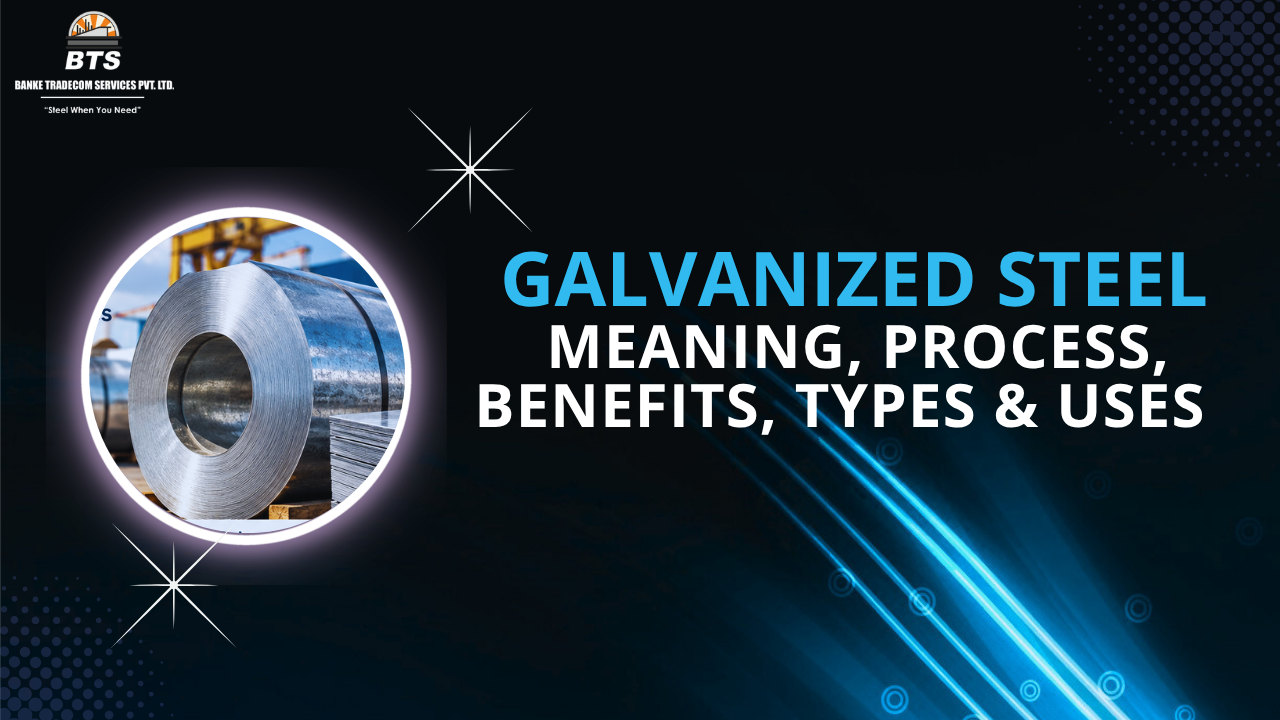
Steel is strong, versatile and widely used in construction and industrial applications. But when exposed to moisture, chemicals and outdoor conditions, untreated steel can eventually develop rust and corrosion.This is where Galvanized Steel becomes important.
By applying a protective zinc coating to steel, galvanizing helps protect the underlying metal from corrosion and extends its service life. This makes galvanized steel a popular choice for roofing, structural components, electrical infrastructure, automotive parts, agricultural equipment and many other applications.
In this guide, we will explain the galvanized steel meaning, how the galvanizing process works, its major benefits, different types and common uses.
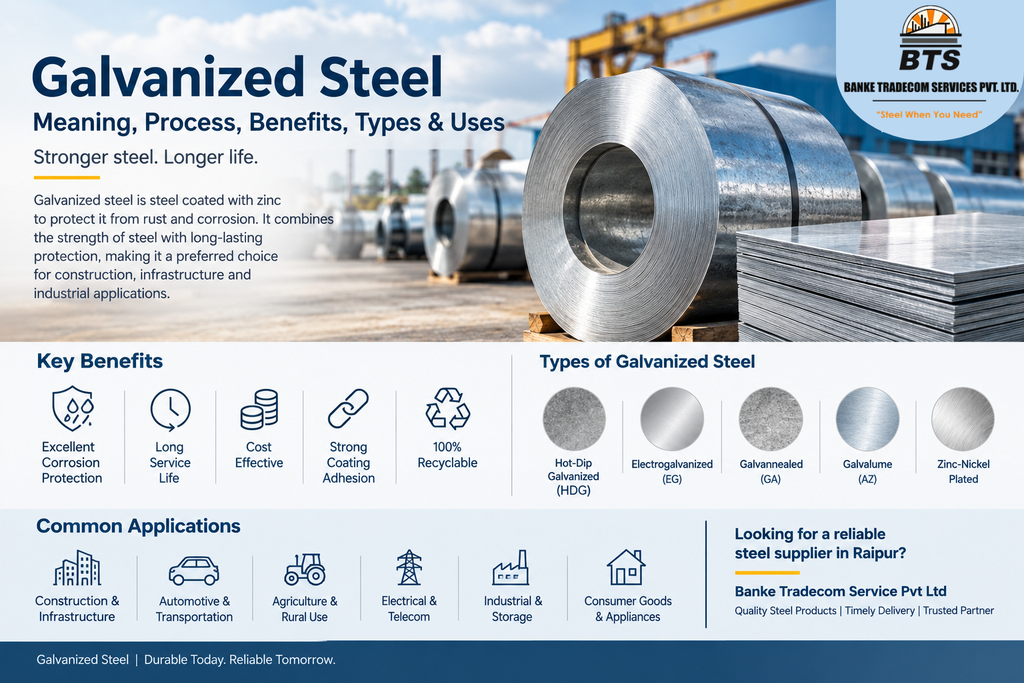
What Is Galvanized Steel?
We coat galvanized steel with zinc to protect its surface from corrosion.
The zinc coating acts as a protective layer between the steel and its surrounding environment. One of the important advantages of zinc is that it can also provide cathodic protection. If the coating sustains a small area of damage, the zinc around the exposed area corrodes preferentially, protecting the underlying galvanized steel.
In simple terms:
Steel + Zinc Protection = Galvanized Steel
Manufacturers widely use the process because it combines the structural strength of steel with zinc’s corrosion protection.
Galvanized Steel Meaning: What Does “Galvanized” Mean?
The term galvanized steel refers to steel that has undergone a galvanizing treatment, usually involving the application of a zinc coating.
The basic purpose is simple: protect steel from corrosion and increase its usable life.
Unlike an ordinary painted surface, zinc can provide both barrier protection and sacrificial protection. This makes galvanizing particularly useful for steel products exposed to outdoor or corrosive environments.
How Is Galvanized Steel Made?
The exact galvanizing method depends on the product and application, but the basic process involves preparing the steel surface and applying zinc.
1. Surface Preparation
We must clean the galvanized steel surface before zinc can bond properly.
Oil, grease, dirt, mill scale and other contaminants are removed through suitable cleaning and chemical treatment.
2. Pickling
The steel may be treated with an acidic solution to remove oxides and scale from the surface.
This creates a cleaner surface for the zinc coating.
3. Fluxing
A flux treatment can be used to prevent oxidation and help the molten zinc react properly with the cleaned steel surface.
4. Zinc Coating
In the hot-dip galvanizing process, prepared steel is immersed in a bath of molten zinc.
The zinc reacts with the steel surface and forms a metallurgically bonded coating.
5. Cooling and Inspection
After leaving the zinc bath, the coated steel is cooled and inspected.
Depending on the product specification, checks may include:
- Coating thickness
- Coating weight
- Surface appearance
- Adhesion
- Dimensional requirements
- Overall product quality
This process creates a durable protective coating that can significantly improve the corrosion resistance of steel.
How Does Galvanized Steel Prevent Rust?
The protection offered by galvanized steel comes from two main mechanisms.
Barrier Protection
The zinc coating separates the steel surface from moisture, oxygen and other elements that can cause corrosion.
Cathodic Protection
Zinc is more chemically active than iron. If someone scratches or locally damages the coating, zinc preferentially corrodes and protects the exposed steel in the surrounding area.
This sacrificial behaviour is one of the major reasons galvanized steel is widely used for outdoor applications.
Types of Galvanized Steel
Not all zinc-coated steel is produced in exactly the same way. Manufacturers select galvanizing methods based on the required surface finish, corrosion protection, and application.
1. Hot-Dip Galvanized Steel
Hot-dip galvanizing involves immersing steel in molten zinc.
It produces a robust zinc coating and is widely used for products exposed to outdoor and demanding environments.
Common applications:
- Structural components
- Roofing products
- Guardrails
- Electrical infrastructure
- Cable trays
- Outdoor fabrication
2. Electrogalvanized Steel
Electrogalvanizing uses an electrochemical process to deposit zinc onto the steel surface.
It generally provides a thinner and more uniform coating with a smooth appearance.
Common applications include:
- Automotive components
- Appliances
- Precision parts
- Products requiring a smooth surface finish
3. Galvannealed Steel
Galvannealed steel is produced through a hot-dip galvanizing process followed by controlled heat treatment.
The resulting zinc-iron alloy coating provides characteristics that can be useful for forming, welding and painting.
It is commonly associated with automotive body panels and fabricated components.
4. Galvalume
Conventional galvanized steel differs from Galvalume because its coating is mainly a zinc-aluminium alloy with a small amount of silicon.
People use galvanized steel for applications such as:
- Roofing
- Wall cladding
- Building envelopes
- Outdoor structures
Its coating composition provides a combination of corrosion resistance and heat-reflective properties.
5. Zinc-Nickel Coated Steel
Zinc-nickel coatings use an alloy coating rather than pure zinc.
We use galvanized steel in applications requiring high corrosion resistance in relatively thin coatings, particularly in specialized automotive and engineering sectors.
Key Benefits of Galvanized Steel
The popularity of galvanized steel comes from its combination of corrosion resistance, durability and relatively low maintenance requirements.
1. Excellent Corrosion Protection
The zinc coating protects the underlying steel from environmental exposure and helps reduce the risk of rust.
2. Long Service Life
Properly specified galvanized coatings can provide long-term corrosion protection, with service life depending heavily on coating thickness and the surrounding environment.
3. Low Maintenance
Because the zinc coating provides long-lasting protection, galvanized steel generally requires less frequent maintenance than unprotected steel.
4. Strong Coating Adhesion
In hot-dip galvanizing, zinc reacts with the steel surface and creates zinc-iron alloy layers. This metallurgical bond provides strong adhesion between the coating and the base steel.
5. Protection of Difficult Areas
Galvanizing can provide protection over edges, corners and other areas that may be difficult to protect consistently using conventional paint systems.
6. Cost-Effective Over the Long Term
While galvanized steel can have a higher initial material or processing cost than bare steel, reduced maintenance and longer service life can make it economical over the complete life of a structure.
7. Respectability
Recycling processes recover and recycle steel and zinc, which makes galvanized steel compatible with recycling and circular material-use practices.
Galvanized Steel vs Painted Steel
Galvanizing and painting protect steel, but they work differently.
| Feature | Galvanized Steel | Painted Steel |
|---|---|---|
| Primary protection | Zinc coating | Paint coating |
| Corrosion protection | Barrier + sacrificial protection | Mainly barrier protection |
| Coating adhesion | Metallurgical bond in hot-dip galvanizing | Adhesion to prepared surface |
| Maintenance | Generally low | May require periodic recoating |
| Surface finish | Metallic zinc appearance | Wide range of finishes |
| Outdoor applications | Widely used | Depends on paint system and environment |
The right protection system depends on the environment, design requirements, appearance, budget and expected service life.
Galvanized Steel Applications
The versatility of galvanized steel makes it suitable for many industries.
1. Construction and Infrastructure
Galvanized steel is commonly used in:
- Roofing sheets
- Wall cladding
- Structural components
- Purlins and girts
- Guardrails
- Cable trays
- Steel conduits
- Handrails
- Outdoor fabrication
Its corrosion resistance makes galvanized steel particularly useful in weather-exposed locations.
2. Automotive Industry
Automakers use galvanized steel and zinc-coated steel in various automotive applications, including:
- Body panels
- Structural components
- Underbody parts
- Automotive hardware
We select different coating processes based on forming, surface, and corrosion-resistance requirements.
3. Agriculture
Galvanized steel is widely used in agricultural and rural infrastructure.
Examples include:
- Farm structures
- Poultry and cattle sheds
- Fencing
- Irrigation components
- Storage structures
- Greenhouse structures
- Water-related equipment
4. Electrical and Telecommunications
Outdoor electrical and communication infrastructure often requires corrosion-resistant steel.
Galvanized products can be used for:
- Transmission towers
- Utility structures
- Cable trays
- Electrical enclosures
- Antenna supports
- Solar mounting structures
5. Industrial Applications
Industrial facilities use galvanized steel in applications such as:
- Storage racks
- Shelving
- Industrial roofing
- Material handling equipment
- Walkways
- Platforms
- Containers
- Fabricated structures
6. Consumer Products
Manufacturers use galvanized and electrogalvanized steel in various consumer and appliance applications where corrosion resistance and surface quality are important.
What Factors Affect Galvanized Steel Performance?
Choosing galvanized steel is not simply about selecting a zinc-coated product. Several factors influence its performance.
Zinc Coating Thickness
A thicker coating can generally provide greater protection, but the appropriate coating depends on the product, specification and environment.
Exposure Conditions
Steel exposed to marine, industrial, humid or highly corrosive environments may require different protection than steel used indoors or in relatively dry conditions.
Steel Composition
The chemical composition of the base steel can influence the appearance and characteristics of the galvanized coating.
Product Design
Corners, edges, drainage, ventilation and the design of fabricated components can influence galvanizing quality and long-term performance.
Quality Inspection
You should check coating thickness, appearance, adhesion, and other relevant requirements according to the applicable product specification.
What Should You Check Before Buying Galvanized Steel?
Whether you are purchasing galvanized sheets, structural components or other coated steel products, check the following:
- Steel grade
- Product dimensions
- Zinc coating specification
- Coating thickness or coating mass
- Surface finish
- Required quantity
- Applicable standards
- Test certificates
- Delivery requirements
- Supplier reliability
For bulk projects, clearly specifying the required coating and product dimensions before ordering can help avoid material mismatches.
Galvanized Steel for Construction Projects
For construction and infrastructure projects, corrosion protection can directly affect long-term maintenance requirements.
People commonly consider galvanized steel for applications where steel is exposed to weather or moisture and where regular repainting would be inconvenient.
Selecting the correct galvanized steel product requires consideration of the project’s environment, structural requirements, coating specification and expected service life.
Frequently Asked Questions
1. What is galvanized steel?
Galvanized steel is steel coated with zinc to improve its resistance to corrosion and environmental exposure.
2. How is galvanized steel made?
Manufacturers apply zinc through processes such as hot-dip galvanizing or electrogalvanizing, depending on the product. In hot-dip galvanizing, prepared steel is immersed in molten zinc to form a protective coating.
3. Is galvanized steel better than normal steel?
Galvanized steel offers additional corrosion protection compared with uncoated steel. Whether it is the appropriate choice depends on the application’s environment, design requirements and expected service life.
4. How long does galvanized steel last?
Its service life depends on factors such as zinc coating thickness and environmental exposure. Properly specified galvanized coatings can provide long-term corrosion protection.
5. Where is galvanized steel used?
Galvanized steel is used in construction, roofing, infrastructure, automotive components, agriculture, electrical systems, telecommunications, industrial structures and many other applications.
6. What is the difference between galvanized steel and Galvalume?
Galvanized steel generally uses a zinc coating, while Galvalume uses a coating primarily composed of zinc and aluminium with a small amount of silicon. Their properties and applications differ according to the required performance.
7. Can galvanized steel be welded?
Yes, galvanized steel can be welded using appropriate procedures. Welding galvanized material requires suitable controls because heating the zinc coating can produce zinc-containing fumes.
8. Where can I buy galvanized steel in Raipur?
For bulk requirements across India, buyers can contact a steel supplier in Raipur such as Banke Tradecom Service Pvt Ltd and provide the required product, dimensions, coating specification and quantity.
About us-
At BTS, we stand out as the leading steel supplier all over India. Our decades of experience, in-depth industry knowledge, and customer-first approach make us the preferred choice for all your steel requirements of various brands like SAIL, Tata Steel, JSW, Jindal, JSPL, etc. We proudly deliver PAN India, ensuring timely and reliable supply wherever you are.
📞 Call us now to get a quote!
📍 Location: Raipur (CG)
📞Phone: 07415009930 | 07415009931
✉️Email: sales@banketrade.in | steel@banketrade.in
🌐Website: www.banketrade.in 🌐Blog Site– https://blog.banketrade.in/
Stay Connected with Us on