Steel is available in different forms to support construction, fabrication and manufacturing. One commonly used product is mild steel wire, which is used in applications ranging from binding wire production and fencing to wire mesh and industrial components.
Its workability and availability in different sizes make it suitable for several general-purpose applications. However, selecting the right product requires understanding its diameter, tensile strength, flexibility and surface finish.
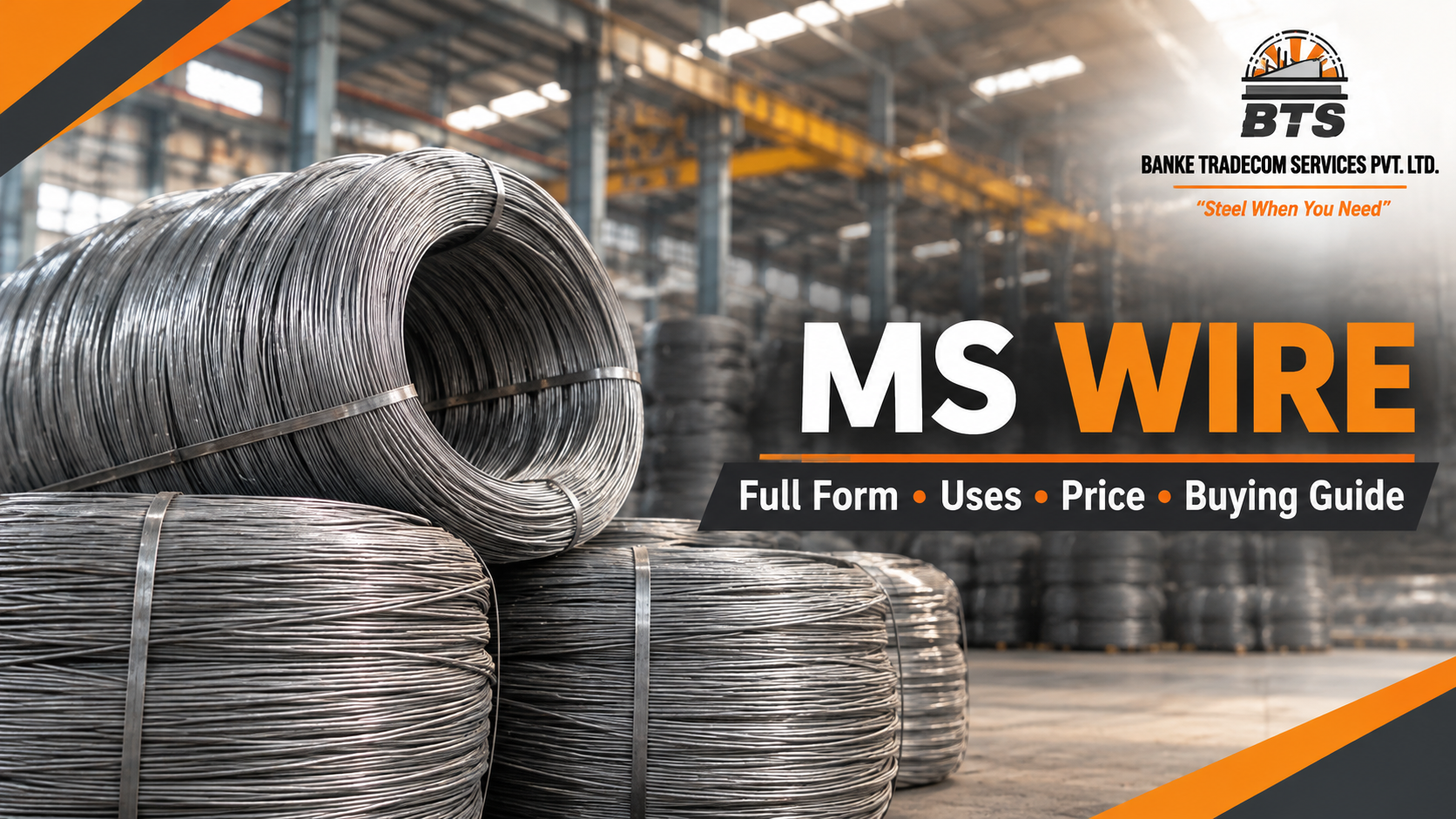
In this guide, we cover the MS wire full form, its properties, common applications, price factors and important points to consider before purchasing.
What Is MS Wire?
The MS wire full form is Mild Steel Wire.
It is a steel wire generally manufactured from low-carbon steel. The production process commonly involves drawing steel rod through dies to reduce its diameter and achieve the required dimensions.
Depending on its grade and manufacturing condition, it is available in different sizes and surface finishes. Its workability makes it suitable for cutting, bending, twisting and forming operations.
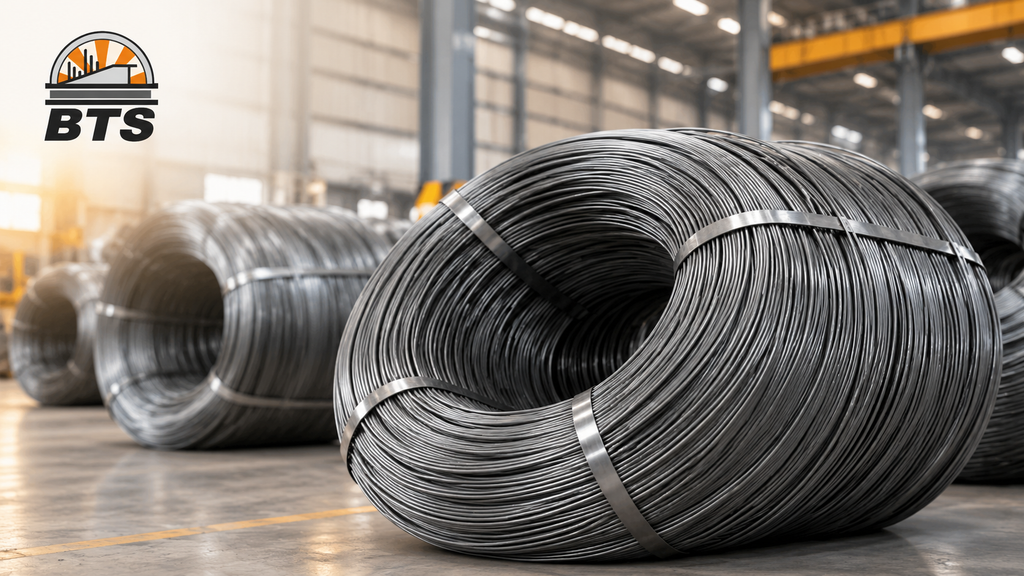
What Is MS Wire Made Of ?
Mild steel generally contains a relatively low percentage of carbon compared with high-carbon steel. Its chemical composition influences properties such as strength, ductility and workability. The final characteristics also depend on the manufacturing process and intended application.
Therefore, buyers should check the product specifications instead of assuming that all mild steel products have identical mechanical properties.
Common Uses in Construction
Mild steel wire has several applications in the construction sector. It is used in certain site activities and also serves as a raw material for manufacturing construction-related products.
1. Binding Wire Manufacturing
One important application is the production of binding wire.
Binding wire is commonly used to tie reinforcement bars at their intersections during reinforced cement concrete (RCC) work. It helps hold the reinforcement arrangement in position before and during concrete placement.
The wire selected for this purpose should have suitable flexibility and workability. General-purpose wire and finished binding wire should not be treated as interchangeable without checking their specifications.
2. Wire Mesh Manufacturing
Steel wire is used to manufacture mesh by arranging individual wires in a regular pattern. Depending on its design, wire mesh can be used for fencing, partitions, protective enclosures and other construction applications. The diameter, mesh spacing and mechanical properties influence the suitability of the finished product.
3. Fencing Applications
Mild steel is used in the production of fencing materials for residential, agricultural, commercial and industrial properties. It can be processed into welded mesh panels and other fencing arrangements.
For outdoor applications, corrosion protection is important. Galvanised or appropriately coated wire may be preferred where exposure to moisture and weather is expected.
4. Manufacturing Nails and Fasteners
This material can serve as a raw material for manufacturing certain types of nails and fasteners.
During production, the wire is cut and shaped according to the required dimensions. Its mechanical properties must be suitable for the manufacturing process and final application.
5. Fabrication and General Construction
Steel wire is also used in fabrication processes where it needs to be cut, bent or formed into specific components. Its suitability depends on the required diameter, mechanical properties and surface condition.
Industrial Applications
Apart from construction, mild steel wire is used in different manufacturing and industrial sectors.
Common examples include:
- Automotive manufacturing: Suitable steel wires are used as raw materials for selected formed and fabricated components.
- Hardware manufacturing: It can be processed into certain clips, fasteners and other hardware products.
- Agriculture: Wire-based products are used in fencing and related applications.
- General engineering: It supports manufacturing operations that require cutting, bending and forming.
- Wire product manufacturing: It serves as a raw material for mesh, nails and other fabricated products.
The required specifications depend on the application. Products that need specialised tensile strength, fatigue resistance or other performance characteristics may require a different steel grade.
Difference Between MS Wire and MS Wire Rod
These two products are related, but they are not the same.
MS wire rod is a hot-rolled steel product generally supplied in coils. It is commonly used as a raw material for manufacturing finished steel wire. The rod undergoes further processing, commonly through wire drawing, to achieve the required diameter and properties.
| Feature | MS Wire Rod | Finished Steel Wire |
|---|---|---|
| Product form | Hot-rolled rod, generally supplied in coils | Finished wire |
| Manufacturing stage | Semi-finished product | Further processed product |
| Common processing | Hot rolling | Usually wire drawing |
| Main purpose | Raw material for wire production | Used directly or processed into other products |
| Applications | Wire drawing and manufacturing | Mesh, fencing, fabrication and other products |
What Factors Affect MS Wire Price?
The MS wire price is not fixed. It changes according to material specifications, market conditions, manufacturing costs and the location of supply. Before comparing quotations, consider the following factors.
1. Diameter
The required thickness is an important factor when comparing products. Different sizes may have different specifications and manufacturing requirements.
2. Grade and Material Composition
The chemical composition and mechanical properties can vary according to the grade. Products designed for different applications may therefore have different prices.
Always compare products with equivalent specifications rather than relying only on the quoted rate.
3. Raw Material Costs
Changes in steelmaking raw material and wire rod prices can influence the manufacturing cost of finished wire.
4. Manufacturing Process
Processing requirements, including drawing and additional treatments or coatings, can affect the final cost.
For example, galvanised wire may have a different price from uncoated material because of the additional coating process.
5. Market Demand and Availability
Demand from construction, manufacturing and infrastructure industries can influence market rates. Availability from manufacturers and suppliers may also affect prices across different locations.
6. Order Quantity and Transportation
The quantity ordered, delivery location, freight and applicable taxes can influence the final purchase cost.
For an accurate MS wire price per kg or per tonne, buyers should request a current quotation based on the required diameter, grade, quantity and delivery location.
How to Choose the Right Product
Choosing the right material involves more than checking its price or appearance. Its specifications should match the intended application.
Here are five important factors to consider before purchasing.
1. Check the Required Diameter
Diameter refers to the thickness of the wire, usually measured in millimetres. Different applications require different sizes. Material used for mesh manufacturing, for example, may have different dimensional requirements from products intended for binding or fabrication. Confirm the specified diameter and applicable tolerances before placing an order.
2. Verify Tensile Strength
Tensile strength indicates the maximum tensile stress a material can withstand before breaking. The required strength depends on how the product will be used. Check the manufacturer’s specifications and relevant test documentation.
3. Consider Ductility and Flexibility
Applications involving bending, twisting or forming require suitable ductility. If the material is unsuitable for the intended process, it may crack or break during fabrication. Selecting the correct grade and manufacturing condition can help reduce this risk.
4. Check Surface Finish and Corrosion Protection
Uncoated mild steel can corrode when exposed to moisture and oxygen.
For outdoor or moisture-prone applications, galvanised or otherwise protected wire may be more appropriate. The required level of protection should depend on the working environment and expected service conditions.
5. Review Specifications and Quality Documents
Before purchasing, check:
- Product grade and chemical composition
- Diameter and dimensional tolerances
- Tensile strength and other relevant mechanical properties
- Surface condition and coating, if applicable
- Applicable product standard and test documentation
Selecting material according to its intended use helps ensure that it is suitable for the required manufacturing or construction process.
Which Indian Standard Applies to Mild Steel Wire?
IS 280:2006 – Mild Steel Wire for General Engineering Purposes is a relevant Indian Standard for this product category.
The Bureau of Indian Standards (BIS) lists this standard under its product certification information. It has also recorded amendments, including a second amendment in 2025.
However, buyers should confirm that the product falls within the scope of the relevant standard and check the latest applicable requirements. Not every product marketed informally as mild steel wire should automatically be assumed to conform to IS 280.
For reference, wire rod is a separate product category. IS 7887:1992 – Mild Steel Wire Rods for General Engineering Purposes is relevant to that product.
Always verify the applicable specification for the actual material and intended use.
Looking for a Steel Supplier in Raipur ?
When purchasing steel products, buyers should consider specifications, quantity requirements, product availability and delivery arrangements.
If you are looking for a steel supplier in Raipur, Banke Tradecom Services Pvt. Ltd. is based in Raipur, Chhattisgarh, and supplies steel products to customers across India.
For enquiries about mild steel wire and other steel requirements, contact the team to confirm product availability, specifications and current pricing.
Frequently Asked Questions
1. What is the full form of MS wire?
MS stands for Mild Steel. It refers to wire generally manufactured from low-carbon steel and used in construction, fabrication and industrial applications.
2. What is mild steel wire used for?
It is used in manufacturing binding wire, wire mesh, fencing materials, nails, fasteners and other fabricated products. Its suitability depends on the grade, diameter and mechanical properties.
3. What is the difference between MS wire and MS wire rod?
Wire rod is a hot-rolled steel product generally supplied in coils and used as a raw material. Finished wire is produced through further processing, commonly by wire drawing.
4. What is the price per kg?
The rate varies according to diameter, grade, manufacturing process, surface finish, market conditions, order quantity and delivery location. Request a current quotation for the exact specifications.
5. Is mild steel wire suitable for outdoor use?
Uncoated mild steel can corrode when exposed to moisture and oxygen. For outdoor applications, galvanised or appropriately coated wire may be more suitable, depending on exposure conditions.
6. Which IS standard applies to mild steel wire?
IS 280:2006 covers mild steel wire for general engineering purposes. Buyers should check the latest amendments and confirm whether the product falls within the standard’s scope.
7. What is the difference between MS wire and GI wire?
Mild steel wire generally refers to wire without necessarily having a protective coating. GI wire is galvanised steel wire with a zinc coating that provides additional corrosion protection.
8. Where can I buy mild steel wire in Raipur?
You can contact Banke Tradecom Services Pvt. Ltd., a steel supplier based in Raipur, Chhattisgarh, for product enquiries. Confirm the required specifications, availability and current price before placing an order.
About us-
At BTS, we stand out as the leading steel supplier all over India. Our decades of experience, in-depth industry knowledge, and customer-first approach make us the preferred choice for all your steel requirements of various brands like SAIL, Tata Steel, JSW, Jindal, JSPL, etc. We proudly deliver PAN India, ensuring timely and reliable supply wherever you are.
📞 Call us now to get a quote!
📍 Location: Raipur (CG)
📞Phone: 07415009930 | 07415009931
✉️Email: sales@banketrade.in | steel@banketrade.in
🌐Website: www.banketrade.in 🌐Blog Site– https://blog.banketrade.in/
Stay Connected with Us on