Steel pipes are essential in industries where the safe movement of liquids, gases and other materials is critical. However, not every application can rely on the same type of pipe. Projects involving high pressure, elevated temperatures or demanding operating conditions may require seamless pipe.
Understanding the seamless pipe meaning, manufacturing process, applications and price factors can help buyers select the right steel pipe for their project.
In this guide, we explain what seamless pipes are, how they are manufactured, where they are used and what to consider before purchasing them.
What Is a Seamless Pipe?
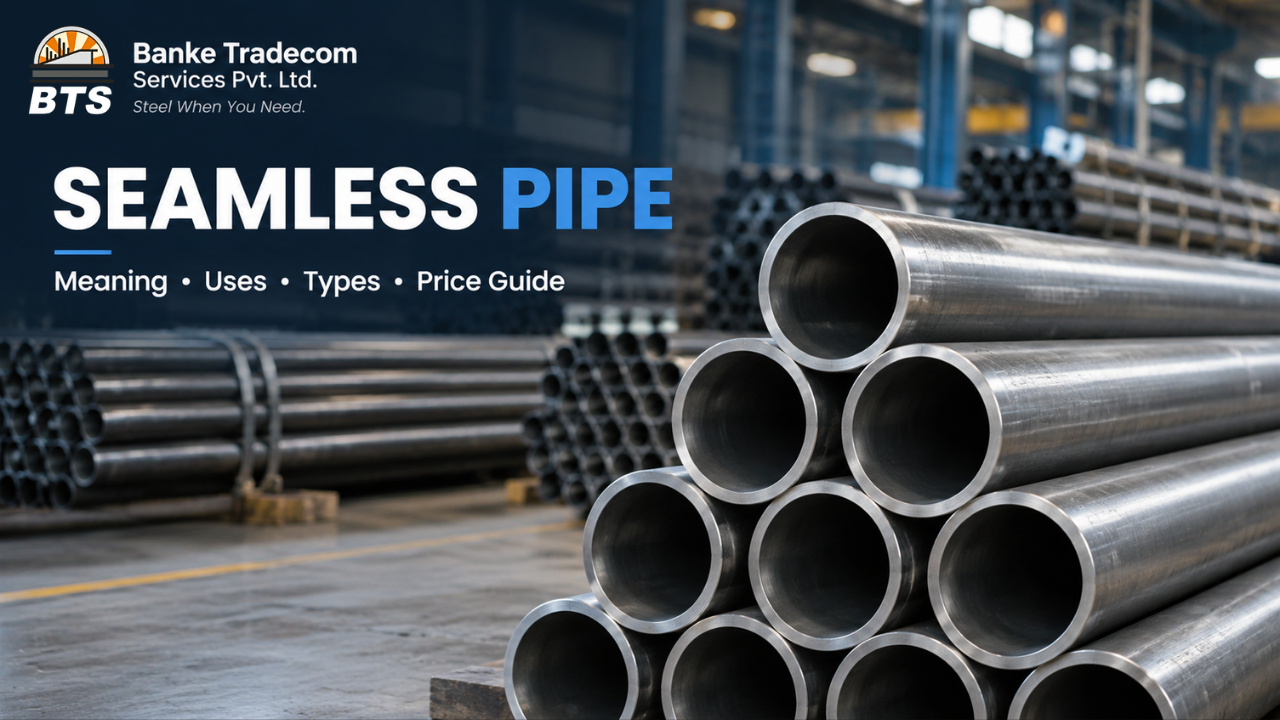
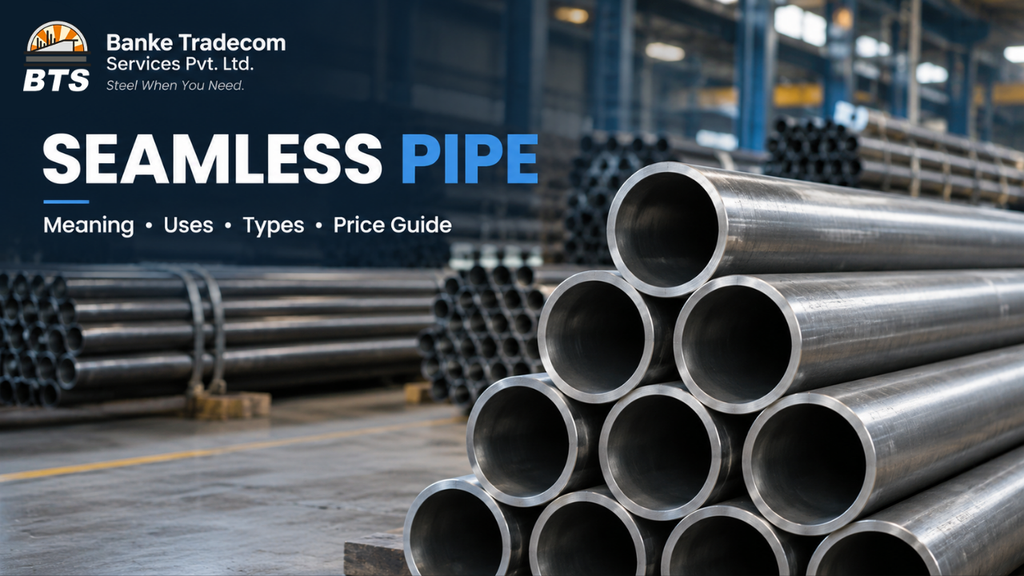
A seamless pipe is a steel pipe manufactured without a welded joint along its length. Unlike welded pipes, which are made by joining steel plates or strips, seamless pipes are produced by forming a solid steel billet into a hollow cylindrical shape.
Because there is no longitudinal weld seam, seamless pipes are widely used in applications where pressure resistance, material consistency and reliability are important.
However, the actual performance of a seamless steel pipe depends on several factors, including its steel grade, wall thickness, manufacturing quality and compliance with the required standards.
How Are Seamless Pipes Manufactured?
The seamless pipe manufacturing process involves several stages to achieve the required dimensions, strength and mechanical properties.
1. Steel Billet Selection
The process begins with a solid steel billet. Its chemical composition and quality are selected according to the intended application and required pipe grade.
2. Heating the Billet
The billet is heated to a suitable temperature to make the steel workable for the forming process. The temperature depends on the material grade and manufacturing method.
3. Rotary Piercing
The heated billet passes through a piercing mill, where mechanical forces and a piercing plug create a hollow centre. This forms the initial hollow shell used to produce the seamless pipe.
4. Rolling and Elongation
The hollow shell passes through rolling mills to achieve the required outer diameter, wall thickness and length. The specific rolling process depends on the pipe’s dimensions and intended application.
5. Sizing, Finishing and Inspection
The pipe is sized, cooled, straightened and cut to the specified length. Depending on the application and applicable standard, additional operations may include heat treatment, hydrostatic testing, non-destructive testing and surface treatment.
For applications requiring tighter dimensional tolerances or a better surface finish, cold drawing or cold rolling may also be used.
Properties of Seamless Steel Pipe
Seamless pipes are selected for applications where consistent performance is important. Their key characteristics include:
- No longitudinal weld seam: Removes the welded joint along the pipe’s length as a potential point of concern.
- Pressure-handling capability: Suitable grades and dimensions can be designed for demanding pressure applications.
- Mechanical strength: Performance depends on the steel grade, heat treatment and manufacturing quality.
- Dimensional options: Available in different diameters, wall thicknesses and lengths to meet project requirements.
- High-temperature performance: Specific carbon and alloy steel grades are designed for elevated-temperature service.
- Material options: Carbon steel, alloy steel and stainless steel variants are available for different operating environments.
Important: Seamless construction does not automatically make a pipe corrosion-proof. Corrosion resistance depends mainly on the material composition, service conditions and any protective treatment used.
What Is Seamless Pipe Used For?
One of the most common buyer questions is: what is seamless pipe used for? These pipes are used across industries that require dependable performance under specific mechanical, pressure or temperature conditions.
1. Oil and Gas Industry
Seamless pipes are used in selected drilling, well tubing, casing and process-piping applications. The required pipe specification depends on whether it will operate downhole, transport fluids or be used in a refinery.
Standards such as API 5CT and API 5L cover different types of oil and gas tubular products, so buyers should confirm the specification required for their application.
2. Power Plants and Boilers
Power generation facilities use suitable seamless pipes and tubes in boilers, superstate, heat exchangers and steam systems. These applications may involve high temperatures and pressures, making the correct material grade and inspection requirements essential.
3. Construction and Infrastructure
Seamless steel pipes can be used for selected structural components, columns, supports and other engineered applications. The suitability of a pipe for structural use depends on the design, loading conditions and applicable standards.
4. Automotive and Mechanical Engineering
Precision seamless tubes are used in components such as hydraulic cylinders, axles and other engineered parts where dimensional accuracy and predictable mechanical performance are required.
5. Chemical and Process Industries
Chemical plants and industrial processing facilities use seamless pipes made from suitable carbon steel, alloy steel or stainless steel grades to transport process fluids.
For corrosive chemicals, selecting the right material is particularly important. Seamless construction alone does not guarantee resistance to acids, chlorides or other aggressive substances.
6. Hydraulic and Industrial Equipment
Seamless tubes are used in hydraulic and pneumatic systems, machinery and equipment that require specific pressure ratings, dimensions and surface finishes.
Types of Seamless Pipe
Seamless pipes are available in different material types and manufacturing finishes. The right option depends on the working environment and project specifications.
Carbon Steel Seamless Pipes
These pipes are used in many industrial applications, including fluid transportation, mechanical systems and certain high-temperature services. The required grade depends on the operating conditions.
Alloy Steel Seamless Pipes
Alloy steel pipes contain selected alloying elements to achieve particular mechanical or high-temperature properties. They are used in applications where ordinary carbon steel may not meet the performance requirements.
Stainless Steel Seamless Pipes
Stainless steel seamless pipes are selected for applications requiring corrosion resistance, hygiene or specific chemical and temperature performance. The appropriate stainless steel grade depends on the fluid and environment.
Hot-Finished Seamless Pipes
Hot-finished pipes are formed and sized at elevated temperatures. They are available for a range of industrial applications, with dimensional tolerances depending on the product specification.
Cold-Drawn Seamless Pipes
Cold-drawn pipes undergo additional processing to achieve tighter dimensional tolerances and a smoother surface finish. They are commonly considered for precision engineering and specialised mechanical applications.
Seamless Pipe vs Welded Steel Pipe
Both seamless and welded steel pipes have important industrial uses. The best choice depends on the project requirements rather than the manufacturing method alone.
| Feature | Seamless Pipe | Welded Pipe |
|---|---|---|
| Manufacturing | Formed from a solid billet | Made by welding steel plate or strip |
| Longitudinal weld seam | Absent | Present |
| Common applications | Selected high-pressure, temperature-critical and precision applications | General fluid transport, structural and industrial applications |
| Size availability | Available in specified diameter and thickness ranges | Available in a broad range of sizes, including large diameters |
| Cost | Often higher for comparable specifications | Often more economical for many applications |
| Selection factors | Grade, pressure, temperature, dimensions and standards | Grade, weld quality, pressure, dimensions and standards |
A properly manufactured and inspected welded pipe can be suitable for many demanding applications. Likewise, a seamless pipe must meet the required material, dimensional and testing specifications.
Always select the pipe based on the applicable engineering design and service conditions.
What Factors Affect Seamless Pipe Price?
The seamless pipe price varies according to the material, dimensions, manufacturing requirements and prevailing market conditions. There is no single price that applies to every seamless steel pipe.
Consider these key factors before requesting a quotation.
1. Steel Grade and Material
Carbon steel, alloy steel and stainless steel pipes can have significantly different prices. Special material requirements may increase the overall cost.
2. Outer Diameter and Wall Thickness
The pipe’s dimensions influence its material consumption and manufacturing cost. Larger diameters or heavier wall thicknesses can affect the price per metre or per tonne.
3. Manufacturing Process
Hot-finished and cold-drawn pipes may have different costs because of their processing requirements, dimensional tolerances and surface-finish specifications.
4. Applicable Standards and Testing
Pipes requiring specific standards, material test certificates, heat treatment or additional inspection may have different prices from general-purpose products.
5. Order Quantity
Bulk requirements may influence the quoted rate, subject to availability, manufacturer terms and order specifications.
6. Transportation and Delivery Location
Freight, handling, taxes and delivery distance can affect the final landed cost. Buyers should compare the delivered price rather than considering only the basic material rate.
Buying tip: When requesting a seamless pipe price, provide the material grade, outside diameter, wall thickness, length, applicable standard, quantity and delivery location. This helps suppliers prepare a more accurate quotation.
Buying Seamless Pipe from a Steel Supplier in Raipur
For industrial and infrastructure projects, working with a dependable steel supplier can help simplify material sourcing and delivery coordination.
Banke Tradecom Service Pvt Ltd is a steel supplier based in Raipur, Chhattisgarh, serving steel requirements across India. Buyers sourcing seamless pipes can discuss their project specifications, required quantities, material grades and delivery requirements when seeking a quotation.
Before ordering, share the intended application, pipe dimensions, required standard and quantity so the availability and suitability of the material can be assessed.
If you are looking for a steel supplier in Raipur, make sure your supplier understands the project specifications and provides clear information about product grade, documentation, pricing and delivery.
Frequently Asked Questions (FAQs)
1. What is the seamless pipe meaning?
Seamless pipe means a pipe manufactured without a longitudinal welded joint. It is generally produced by forming a solid steel billet into a hollow shape and then rolling or processing it to the required dimensions.
2. What is seamless pipe used for?
Seamless pipes are used in oil and gas operations, boilers, power plants, industrial machinery, hydraulic systems, chemical processing and selected structural applications. The appropriate pipe depends on its grade, dimensions and service conditions.
3. What is the difference between seamless and welded steel pipe?
A seamless pipe is formed from a solid billet and has no longitudinal weld seam. A welded pipe is made by joining steel plate or strip. Both can be suitable for industrial applications when manufactured and tested to the required specifications.
4. Are seamless pipes stronger than welded pipes?
Not in every situation. Seamless pipes avoid a longitudinal weld seam, but actual strength and performance depend on material grade, wall thickness, manufacturing quality, weld quality where applicable, testing and design requirements.
5. Are seamless pipes corrosion-resistant?
Corrosion resistance depends primarily on the material grade and operating environment. Stainless steel and certain alloy pipes can provide corrosion resistance, but a carbon steel seamless pipe is not automatically corrosion-resistant simply because it has no weld seam.
6. What factors affect seamless pipe price?
The main factors include material grade, outside diameter, wall thickness, manufacturing process, quality standards, testing, order quantity, market conditions and transportation costs.
7. Which standards apply to seamless pipe?
Depending on the application, relevant specifications may include ASTM A106 for certain carbon steel pipes used in high-temperature service, ASTM A335 for specified ferritic alloy-steel pipes, ASTM A312 for stainless steel pipes and applicable API specifications for oil and gas products. Always confirm the exact standard and grade required for the project.
8. Are seamless pipes suitable for high-pressure applications?
Some seamless pipe grades and dimensions are designed for high-pressure service. Suitability must be confirmed against the operating pressure, temperature, material specification, wall thickness and applicable engineering code.
9. What details are required to get a seamless pipe quotation?
Provide the material grade, outside diameter, wall thickness, length, applicable standard, required quantity and delivery location. Also mention any testing, certification or special finishing requirements.
10. Where can I find a steel supplier in Raipur?
You can contact Banke Tradecom Service Pvt Ltd, a steel supplier based in Raipur, Chhattisgarh, to discuss your steel requirements, product specifications and delivery needs. Confirm the availability of the required seamless pipe grade and dimensions before placing an order.
About us-
At BTS, we stand out as the leading steel supplier all over India. Our decades of experience, in-depth industry knowledge, and customer-first approach make us the preferred choice for all your steel requirements of various brands like SAIL, Tata Steel, JSW, Jindal, JSPL, etc. We proudly deliver PAN India, ensuring timely and reliable supply wherever you are.
📞 Call us now to get a quote!
📍 Location: Raipur (CG)
📞Phone: 07712292080 | 07415009930 | 07415009931
✉️Email: sales@banketrade.in | steel@banketrade.in
🌐Website: www.banketrade.in 🌐Blog Site– https://blog.banketrade.in/
Stay Connected with Us on