When buying steel for fabrication, thickness is usually one of the first specifications manufacturers and fabricators check. While thickness is important, it is not the only factor that determines whether a steel sheet is suitable for a particular application.
The steel grade, surface condition, flatness, dimensional accuracy, weldability, and flammability can all influence fabrication quality, production time, and the performance of the finished component.
This is especially important when working with HR Sheets, which are widely used in construction, engineering, machinery manufacturing, and heavy fabrication.
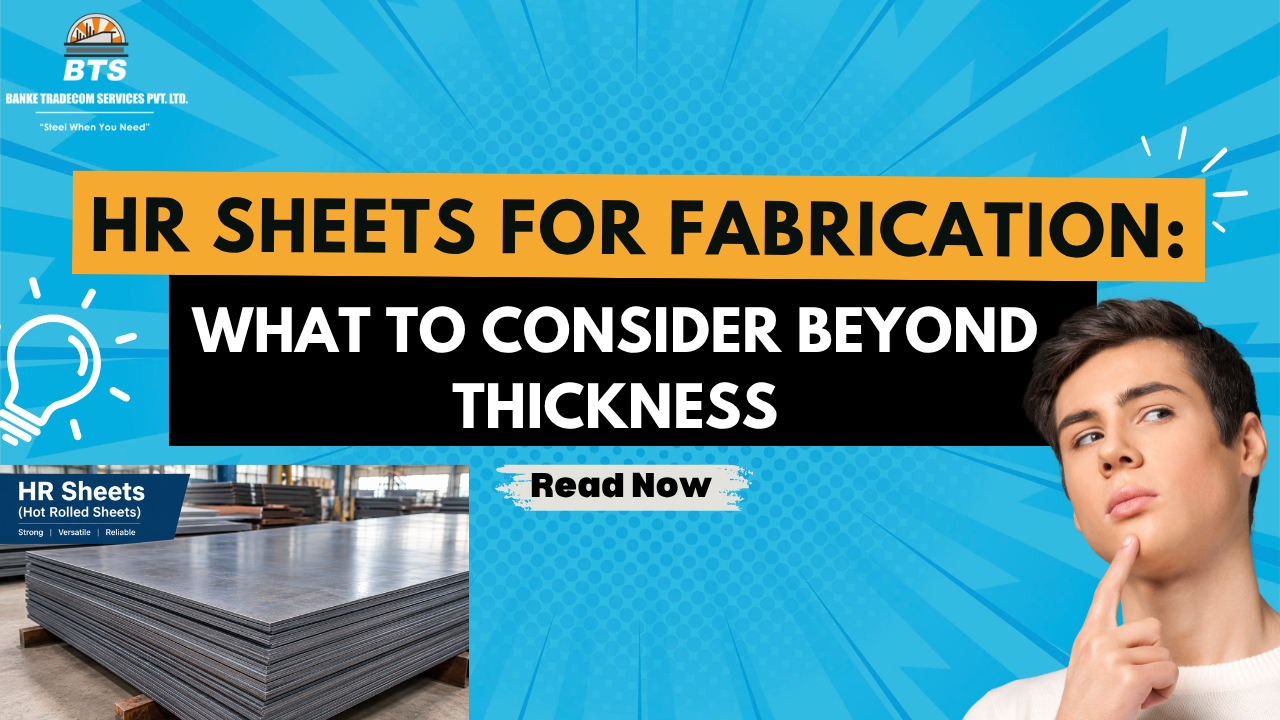
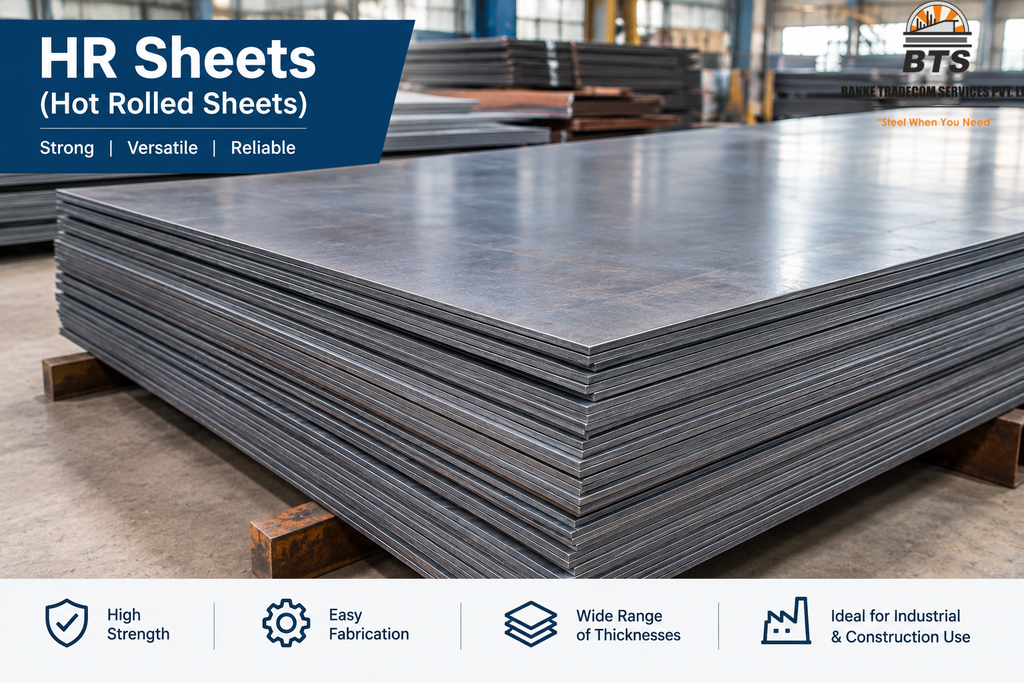
But what is the HR Sheet full form in steel? HR Sheet stands for Hot Rolled Sheet. These sheets are produced by rolling steel at high temperatures and are commonly selected for applications where strength, durability, and ease of fabrication are important.
In this guide, we’ll look at what fabricators should consider when purchasing HR Sheets, why thickness alone is not enough, and how choosing the right material can improve fabrication efficiency.
What Is an HR Sheet?
An HR Sheet, or Hot Rolled Sheet, is a steel product manufactured by rolling steel at elevated temperatures. The hot rolling process makes it possible to produce steel sheets in a wide range of thicknesses and dimensions.
Because of their combination of strength, versatility, and workability, hot rolled sheets are commonly used for heavy-duty fabrication and industrial applications.
HR Sheets can be used for:
- Structural steel fabrication
- Industrial machinery
- Construction equipment
- Machine frames
- Storage and material-handling systems
- Agricultural equipment
- Automotive components
- General engineering applications
The exact HR Sheet grade, thickness, and dimensions should be selected according to the requirements of the final application.
Why Are Hot Rolled Sheets Widely Used in Fabrication?
The popularity of hot rolled sheets comes from their versatility and suitability for a variety of manufacturing processes.
Depending on the grade and specification, HR Sheets can be cut, welded, bent, formed, and machined for different fabrication requirements.
They are particularly useful when the project prioritizes structural performance and practical fabrication over a highly smooth surface finish.
For fabricators, this makes HR Sheets suitable for both individual components and larger fabricated structures.
Is Thickness the Most Important Factor When Choosing an HR Sheet?
Thickness is certainly important, but it should not be the only specification considered.
A thicker HR Sheet may provide greater section strength in a particular application, but simply choosing a thicker sheet does not automatically mean better performance.
For example, excessive thickness can:
- Increase component weight
- Increase material consumption
- Require additional cutting and handling
- Increase welding requirements
- Raise transportation costs
On the other hand, selecting a sheet that is too thin for the intended application can affect structural performance and durability.
Therefore, fabricators should consider the complete material specification rather than selecting an HR Sheet based only on thickness.
7 Important Factors to Consider When Choosing HR Sheets
1. Steel Grade
Steel grade is one of the most important factors when selecting an HR Sheet.
Different grades have different mechanical properties, including strength, ductility, and other characteristics that affect how the material behaves during fabrication and service.
Choosing the appropriate grade helps ensure that the finished component performs according to the project requirements.
Before ordering, fabricators should confirm:
- Required steel grade
- Mechanical properties
- Applicable standards
- Project specifications
- Required certification
Two HR Sheets with the same thickness can have different performance characteristics if they are made from different steel grades.
2. Surface Condition
Unlike cold rolled steel, hot rolled steel commonly has a mill-scale surface resulting from the high-temperature manufacturing process.
However, the overall surface condition still needs to be checked before fabrication.
Surface condition can affect processes such as:
- Welding
- Painting
- Coating
- Machining
- Surface preparation
- Corrosion protection
Excessive rust, surface defects, or unsuitable scale conditions can create additional preparation work and affect production efficiency.
3. Flatness and Dimensional Accuracy
A sheet may have the correct thickness but still create fabrication problems if its dimensions or flatness are inconsistent.
Good dimensional accuracy can make processes such as CNC cutting, bending, and assembly more predictable.
High-quality HR Sheets can help fabricators achieve:
- More accurate cutting
- Consistent bending
- Better component fit-up
- Lower material wastage
- Reduced rework
- Improved assembly accuracy
For precision fabrication, width, length, thickness, and flatness should all be checked against the project requirements.
4. Weldability
Welding is a major part of many fabrication processes, making weldability an important consideration when buying HR Sheets.
Suitable material properties can help achieve consistent weld joints and reduce the possibility of fabrication defects.
Good weldability can contribute to:
- Reliable welded joints
- Easier fabrication
- Reduced repair work
- Better structural integrity
- More consistent production
Welding parameters should still be selected according to the specific steel grade, thickness, joint design, and applicable welding procedure.
5. Formability
Many fabricated components require steel to be bent, rolled, pressed, or formed into a particular shape.
The appropriate hot rolled sheet should therefore have characteristics suitable for the intended forming operation.
Depending on the application, HR Sheets may undergo:
- Press brake bending
- Rolling
- Edge bending
- Forming
- Component shaping
Selecting material that is appropriate for the planned fabrication process can reduce cracking, rejection, and unnecessary material waste.
6. Sheet Dimensions
Sheet size can directly affect material utilization.
Choosing dimensions that match the component layout can reduce unnecessary cutting and scrap.
Before placing an order, fabricators should confirm:
- Sheet length
- Sheet width
- Thickness
- Required quantity
- Cutting requirements
- Transportation limitations
Proper material planning can improve production efficiency and reduce overall wastage.
7. Material Documentation
For industrial and structural projects, material documentation can be an important part of quality control.
Depending on the project requirements, buyers may need to verify:
- Mill Test Certificate (MTC)
- Steel grade
- Applicable standard
- Heat number or material traceability
- Dimensional compliance
- Inspection documentation
Proper documentation makes it easier to maintain quality records and verify that the supplied material matches the purchase specification.
How HR Sheet Quality Affects Fabrication Efficiency
Choosing the right HR Sheet is not only about achieving the required strength. Material consistency can also affect how efficiently the fabrication process runs.
Faster Cutting
Consistent sheet dimensions and material properties can help cutting operations run more smoothly.
Whether using plasma, laser, boxy-fuel, or other cutting processes, appropriate material selection can help reduce unnecessary interruptions and rework.
Better Bending and Forming
Consistent mechanical properties can help produce more uniform bends and formed components.
This is particularly useful when multiple components need to maintain similar dimensions during assembly.
Improved Welding
The appropriate steel grade and material condition can contribute to more consistent welding results when the correct welding procedure is followed.
This can reduce unnecessary repairs and production delays.
Reduced Material Waste
Poor material selection can result in rejected components, excessive trimming, or rework.
Selecting the correct thickness, grade, dimensions, and surface condition from the beginning can improve material utilization.
More Consistent Production
When cutting, forming, welding, and assembly processes work smoothly together, manufacturers can reduce production interruptions and maintain more consistent output.
Common Applications of HR Sheets
Because of their versatility, Hot Rolled Sheets are used across several industries.
Structural Steel Fabrication
HR Sheets can be used for structural components, support structures, platforms, brackets, and other fabricated steel applications.
Machinery Manufacturing
Machine frames, equipment components, bases, and fabricated assemblies can use HR Sheets where their material properties meet the design requirements.
Industrial Equipment
Heavy industrial equipment often requires steel with suitable strength and durability.
The correct HR Sheet grade can be selected based on the operating conditions and engineering requirements.
Storage Bins, Hoppers and Containers
HR Sheets can be fabricated into storage bins, hoppers, containers, and similar structures that require cutting, welding, bending, and assembly.
Base Plates and Fabricated Components
Base plates, brackets, support members, mounting components, and custom-fabricated parts are other common applications.
The appropriate sheet thickness and grade should be determined according to the component’s load and design requirements.
HR Sheet Buying Checklist
Before placing an order for Hot Rolled Sheets, check the following:
✔ Confirm the required thickness.
✔ Select the appropriate steel grade.
✔ Verify sheet length and width.
✔ Inspect surface condition.
✔ Check flatness and dimensional accuracy.
✔ Confirm weldability and flammability requirements.
✔ Ask for relevant material documentation.
✔ Verify quantity and availability.
✔ Confirm delivery schedule.
✔ Choose a reliable steel supplier.
A proper material check before purchasing can help reduce fabrication problems and improve overall production efficiency.
Frequently Asked Questions About HR Sheets
1.What is the HR Sheet full form in steel?
The HR Sheet full form in steel is Hot Rolled Sheet. It is a steel sheet manufactured through a hot rolling process and is widely used for structural and industrial applications.
2.What is an HR Sheet used for?
HR Sheets are commonly used for structural fabrication, machinery manufacturing, industrial equipment, construction, agricultural equipment, storage systems, and general engineering applications.
3.Are HR Sheets suitable for welding?
HR Sheets can be suitable for welding when the appropriate steel grade and welding procedure are selected for the application. Welding parameters should be based on the material specification and project requirements.
4.Is a thicker HR Sheet always better?
No. The correct thickness depends on the application’s structural and fabrication requirements. Steel grade, loading, design, weldability, and forming requirements should also be considered.
5.What is the difference between HR Sheet and CR Sheet?
HR Sheets are produced through hot rolling at elevated temperatures, while CR Sheets undergo additional cold-rolling processing. CR Sheets generally provide a smoother surface and tighter dimensional tolerances.
6.How should I choose an HR Sheet for fabrication?
Consider the required thickness, steel grade, dimensions, surface condition, flatness, weldability, flammability, applicable standards, and intended application.
7.Where can I buy HR Sheets from a steel supplier in Raipur?
Banke Tradecom Service Pvt Ltd is based in Raipur, Chhattisgarh, and supplies steel products for construction and industrial requirements. Buyers can share their HR Sheet grade, thickness, dimensions, quantity, and delivery location for procurement enquiries.
About us-
At BTS, we stand out as the leading steel supplier all over India. Our decades of experience, in-depth industry knowledge, and customer-first approach make us the preferred choice for all your steel requirements of various brands like SAIL, Tata Steel, JSW, Jindal, JSPL, etc. We proudly deliver PAN India, ensuring timely and reliable supply wherever you are.
📞 Call us now to get a quote!
📍 Location: Raipur (CG)
📞Phone: 07415009930 | 07415009931
✉️Email: sales@banketrade.in | steel@banketrade.in
🌐Website: www.banketrade.in 🌐Blog Site– https://blog.banketrade.in/
Stay Connected with Us on