An industrial fabrication project rarely begins with a steel plate alone. It starts with engineering drawings, material specifications, production planning and delivery deadlines. When an E250 plate appears on the material list, one of the first questions procurement teams ask is: What is the E250 plate price, and how do we choose the right material for the project?
The answer depends on more than the quoted rate. Plate thickness, dimensions, required grade, order quantity, processing, transportation and prevailing steel-market conditions can all influence the final purchase cost.
Understanding E250 plate meaning, its properties, applications and procurement requirements helps fabricators, contractors and industrial buyers make informed purchasing decisions. This guide explains what an E250 steel plate is, where it is used, what affects its price and what to check before placing an order.
What Is an E250 Plate?
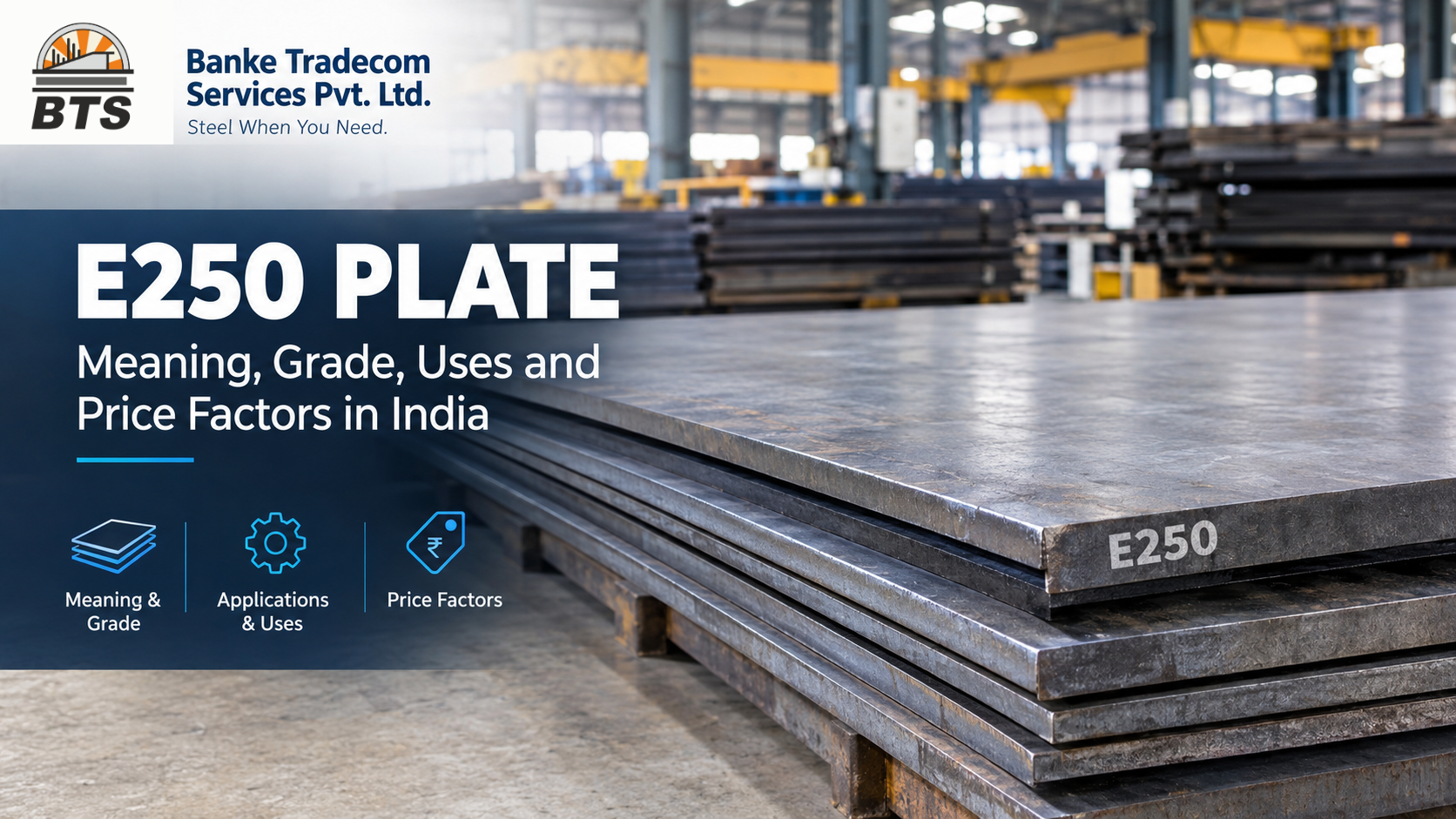
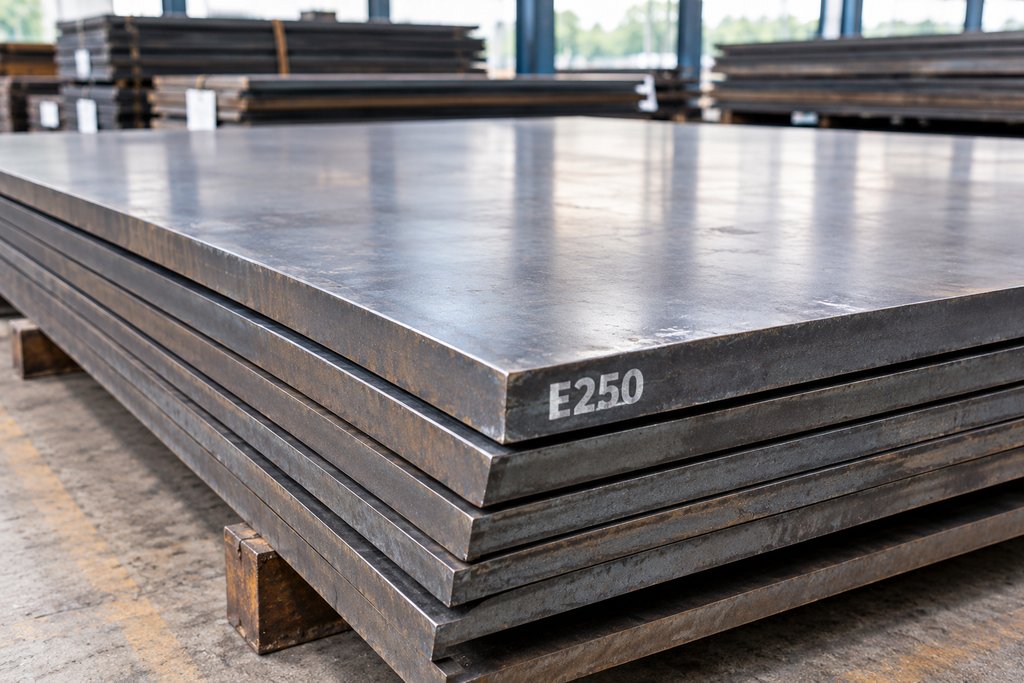
An E250 plate is a structural steel plate commonly specified under India’s IS 2062 structural steel standard. It is used in general fabrication, structural applications and engineering projects where the specified strength and material characteristics meet the design requirements.
The term E250 steel plate refers to a steel plate supplied in the E250 grade. The number 250 is associated with the grade’s minimum yield-strength designation in the applicable thickness range. Yield strength is the stress at which a material begins to deform permanently.
E250 steel is widely used for structural and fabrication work because it offers a practical combination of strength, formability and suitability for common fabrication processes. However, the precise properties depend on the applicable standard, thickness and specified quality grade.
E250 Plate Meaning: Understanding the Grade
When buyers search for E250 plate meaning, they are usually looking to understand what the grade represents and whether it is suitable for their application.
In simple terms, E250 identifies a structural steel grade with a specified yield-strength level. It is important to check the complete material designation on the purchase order rather than relying on the term E250 alone.
The material specification may also identify a quality sub-grade, such as E250A, E250BR, E250B0 or E250C under relevant editions of the standard. These designations relate to requirements such as impact testing and steel making conditions. Always confirm the exact designation and applicable standard required for the project.
For buyers, the key checks are:
- Grade: Confirm that E250 matches the approved engineering specification.
- Thickness: Check that the supplied plate matches the design requirement.
- Dimensions: Confirm the required length and width.
- Quality sub-grade: Verify any impact-testing or other additional requirements.
- Documentation: Check the applicable inspection documents and mill test certificate requirements.
The Bureau of Indian Standards lists IS 2062 (Part 1):2025 as the standard for hot-rolled medium and high-tensile structural steel. Buyers should confirm the applicable standard edition and grade requirements specified for their project before ordering.
What Is an E250 Steel Plate Used For?
The applications of an E250 steel plate depend on the engineering design, loading conditions, fabrication method and environmental requirements. Common applications include the following.
1. Structural Fabrication
E250 plates may be used to fabricate structural components, support assemblies, brackets, base plates and other steel parts when the design specifies this grade.
2. Industrial Equipment and Machinery
Manufacturers may use E250 plates for machine frames, equipment supports, mounting structures and fabricated components, subject to the required design and service conditions.
3. Infrastructure and Construction
Structural steel plates can form part of fabricated assemblies used in industrial buildings, infrastructure and construction-related projects. The specified grade must match the design and applicable standards.
4. General Engineering
Engineering workshops use structural steel plates to manufacture custom components, frames, enclosures and other fabricated products.
5. Fabricated Structures
E250 plates can be used in welded or mechanically assembled structures when the material grade, thickness, weldability and design requirements are appropriate.
Important: E250 should not be selected simply because it is readily available or competitively priced. The engineer’s approved specification must determine the grade and thickness.
What Is an E250 MS Plate?
An E250 MS plate is a mild-steel plate supplied in the E250 structural steel grade. MS stands for mild steel, a common trade term used for low-carbon steel products.
Although buyers may use the terms E250 plate, E250 MS plate and E250 steel plate interchangeably, a general description such as “MS plate” does not confirm compliance with a particular structural steel grade.
When requesting a quotation, specify the required grade, standard, quality sub-grade, thickness, dimensions, quantity and documentation. This helps ensure that the quotation covers the material required for the actual project.
E250 Plate Price: What Determines the Cost?
There is no single E250 plate price that applies to every size and purchase. The price of an E250 plate can change with the following factors.
1. Plate Thickness
Thickness influences the weight of the plate and the quantity of steel purchased. A change in thickness can significantly affect the total material cost.
2. Plate Dimensions
Length and width affect the weight per plate and the way the material can be used during fabrication. Available stock dimensions may also influence the quotation.
3. Steel Market Conditions
Steel prices can change with raw material costs, demand, supply availability and market movements. A previous quotation should not automatically be treated as the current market price.
4. Order Quantity
The total quantity can affect commercial terms, transport planning and availability. Buyers should request quotations based on their actual requirement rather than comparing prices without considering order size.
5. Quality and Documentation Requirements
Specific sub-grades, inspection requirements, testing and material documentation can influence sourcing and overall procurement costs.
6. Cutting and Processing
If plates need to be cut to specified dimensions or undergo additional processing, these services may add to the overall cost. Their value should be assessed against the time and work saved at the fabrication site.
7. Freight and Delivery Location
Steel plates are heavy materials, so transportation, loading and unloading arrangements can have a meaningful impact on the final delivered cost.
For an accurate E250 plate price, provide the supplier with the grade, thickness, dimensions, quantity, delivery location and any special requirements.
E250 Plate Price Per Kg vs Price Per Tonne
Industrial steel buyers may receive quotations on a per-kilogram, per-tonne or per-piece basis. Before comparing offers, convert them to a common unit and confirm what each price includes.
For example, a quotation with a lower basic rate may not be the more economical option if freight, cutting, handling or other charges are excluded.
A useful comparison should include:
- Basic material rate
- Applicable taxes and additional charges
- Cutting or processing costs
- Transportation and unloading
- Material documentation requirements
- Delivery schedule and commercial terms
The objective is to compare the total delivered cost, not just the headline rate.
How to Calculate E250 Plate Weight
Plate weight is useful when estimating material requirements, checking quotations and planning transportation.
A commonly used estimation formula for a rectangular steel plate is:
Weight (kg) = Length (m) × Width (m) × Thickness (mm) × 7.85
Here, 7.85 is the commonly used approximate density factor for steel when the dimensions are entered in these units.
Example: Consider a rectangular plate measuring 2 m × 1 m with a thickness of 10 mm.
Estimated weight = 2 × 1 × 10 × 7.85 = 157 kg
This is an approximate theoretical weight. Actual supplied weight can vary with dimensional tolerances and the product’s actual measurements. Confirm the commercial weighing basis with your supplier.
Standard Plate Sizes or Cut-to-Size E250 Plates?
The choice between standard plate sizes and cut-to-size supply depends on the fabrication plan.
Standard plates may offer flexibility when the workshop needs to produce several components from the same stock. They can be useful when cutting patterns are still being finalized.
Cut-to-size plates may reduce on-site or workshop preparation when drawings are approved and the required dimensions are confirmed. However, late design changes can result in rework or material wastage.
Before choosing either option, consider the cutting layout, component sizes, workshop equipment, material utilisation and delivery schedule.
How to Choose the Right E250 Plate Supplier
Choosing a steel supplier involves more than comparing quoted rates. The supplier should understand the material specification and the practical requirements of the project.
Before confirming an order, consider these points:
- Specification clarity: Can the supplier quote against the required grade, thickness and dimensions?
- Availability: Can the required quantity be arranged within the planned timeline?
- Documentation: Can the necessary material identification and test records be provided?
- Processing: Are cutting or other services available if required?
- Logistics: Are delivery location, freight and unloading arrangements clear?
- Commercial terms: Are taxes, payment terms and other charges clearly stated?
- Communication: Can the supplier coordinate with your procurement and project teams when requirements change?
A clear comparison helps buyers assess whether a quotation meets both their technical and commercial needs.
Common Mistakes to Avoid When Buying E250 MS Plates
1. Comparing Quotes Without Matching Specifications
Two prices are not directly comparable if the grade, thickness, dimensions or documentation requirements differ.
2. Selecting Material Before Drawings Are Finalized
Ordering or cutting plates before the design is approved can lead to avoidable changes and wastage.
3. Ignoring Material Utilisation
The dimensions of the purchased plates should be considered alongside the planned cutting layout to reduce unnecessary off cuts.
4. Overlooking Transportation Costs
The basic material rate does not always represent the final delivered cost. Freight and handling should be included in the comparison.
5. Failing to Check Material Documents
Where the project requires traceability or inspection, verify that the supplied material can be matched to the specified grade and relevant documentation.
6. Ordering Without Considering the Production Schedule
Early delivery may increase storage requirements, while late delivery can interrupt fabrication. Coordinate purchasing with the project timeline.
E250 Plate Procurement for Industrial Projects
A practical procurement process connects engineering, fabrication, purchasing and logistics.
Engineering drawings → Material specification → Quantity calculation → Supplier quotations → Technical and commercial comparison → Order confirmation → Documentation checks → Delivery → Fabrication
Each stage has a clear purpose. Engineering establishes the required material, fabrication planning helps determine the dimensions and quantity, and procurement compares suitable supply options.
This coordinated approach can help industrial buyers reduce avoidable delays and make more informed purchasing decisions.
Frequently Asked Questions About E250 Plates
1. What is an E250 plate?
An E250 plate is a structural steel plate supplied in the E250 grade, commonly specified under India’s IS 2062 structural steel standard. Its suitability depends on the design requirements, thickness and specified quality grade.
2. What does E250 plate meaning refer to?
E250 identifies a structural steel grade associated with a minimum yield-strength designation of 250 MPa in the applicable thickness range. The exact mechanical requirements should be checked against the applicable standard and product specification.
3. What is an E250 steel plate used for?
E250 steel plates may be used for structural fabrication, industrial equipment supports, machinery frames, infrastructure-related assemblies and general engineering applications where the grade meets the design requirements.
4. What is an E250 MS plate?
An E250 MS plate is a mild-steel plate supplied in the E250 structural steel grade. Buyers should confirm the complete grade and standard rather than relying only on the general term MS plate.
5. What is the E250 plate price in India?
The E250 plate price depends on thickness, dimensions, quantity, market conditions, documentation or processing requirements and transportation. Request a current quotation based on your exact material specification.
6. How is E250 plate price calculated per tonne?
The price per tonne depends on the quoted material rate and the applicable commercial terms. Freight, taxes, cutting and other charges should be checked separately to establish the total delivered cost.
7. How can I calculate E250 plate weight?
For an approximate rectangular steel plate weight, multiply length in metres by width in metres, thickness in millimetres and 7.85. Confirm the actual dimensions and weighing basis with the supplier.
8. Is E250 plate suitable for welding?
E250 structural steel plates are used in fabricated structures, including welded applications, when the specified material and welding procedure are suitable. Follow the approved design, applicable standard and qualified welding requirements.
9. What should I check before buying E250 plates?
Confirm the grade, applicable standard, quality sub-grade, thickness, dimensions, quantity, required material documentation, processing needs, delivery schedule and total delivered cost.
10. How do I choose an E250 plate supplier in Raipur?
Compare suppliers on specification compliance, availability, documentation, commercial terms and delivery arrangements. If your project is in Raipur, provide your required grade, size, quantity and delivery location when requesting a quotation from a steel supplier.
11. Does Banke Tradecom Services Pvt. Ltd. supply steel across India?
Banke Tradecom Services Pvt. Ltd. supplies steel across India. Buyers can share their material specifications, quantities and delivery location to discuss their steel sourcing requirements.
About us-
At BTS, we stand out as the leading steel supplier all over India. Our decades of experience, in-depth industry knowledge, and customer-first approach make us the preferred choice for all your steel requirements of various brands like SAIL, Tata Steel, JSW, Jindal, JSPL, etc. We proudly deliver PAN India, ensuring timely and reliable supply wherever you are.
📞 Call us now to get a quote!
📍 Location: Raipur (CG)
📞Phone: 07712292080 | 07415009930 | 07415009931
✉️Email: sales@banketrade.in | steel@banketrade.in
🌐Website: www.banketrade.in 🌐Blog Site– https://blog.banketrade.in/
Stay Connected with Us on