
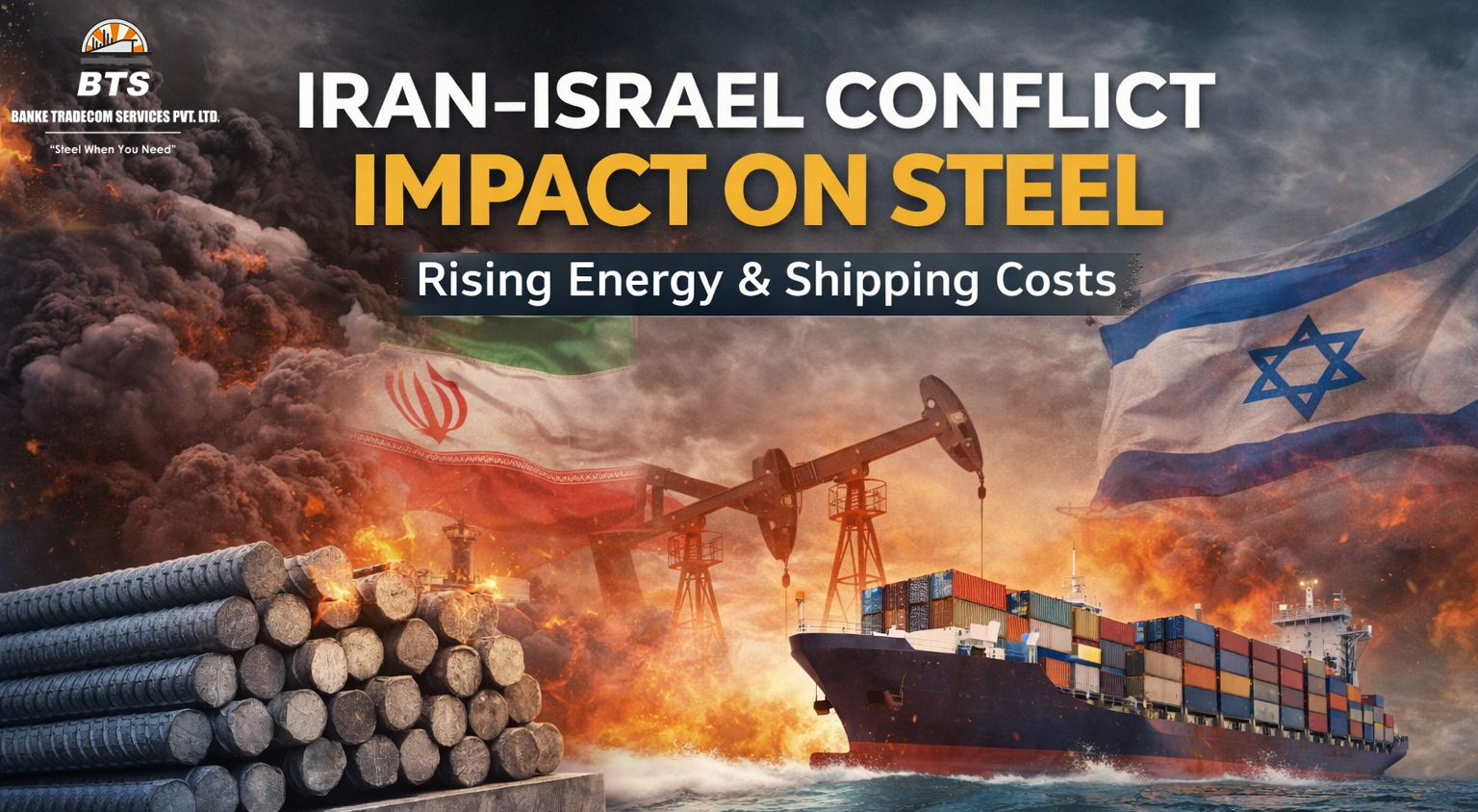
Global geopolitical tensions often influence commodity markets, and the Iran-Israel conflict is now creating ripple effects across energy, shipping, and the steel industry. Rising crude oil prices, higher freight costs, and insurance premiums are beginning to affect steel supply chains worldwide.
For India—one of the fastest-growing construction markets—the Iran Israel war impact on India could translate into higher input costs for steel manufacturing and transportation. This may eventually influence steel availability and pricing for infrastructure and construction projects.
How the Iran-Israel Conflict Is Affecting Global Steel Markets
The ongoing Iran Israel conflict has injected uncertainty into global energy and shipping routes, particularly around the Strait of Hormuz, one of the world’s most important oil and LNG transit routes.
Nearly 20% of global oil trade passes through the Strait of Hormuz, and any disruption in this region immediately impacts fuel prices and shipping costs.
Key developments include:
- Rising crude oil prices due to geopolitical risk
- Increased marine insurance premiums for vessels in the Gulf region
- Higher freight costs for transporting raw materials like iron ore and coal
- Supply chain delays in steel-producing regions
These factors collectively increase the cost of producing and delivering steel products globally.
Rising Energy Costs and Their Effect on Steel Production
Energy plays a major role in steel manufacturing. Blast furnaces, electric arc furnaces, and direct reduced iron (DRI) plants rely heavily on coal, electricity, and natural gas.
Because of the Iran Israel war, crude oil prices have surged from the low $60 range to around the mid-$70s per barrel, with market analysts warning that prices could reach $100 per barrel or higher if tensions escalate.
Higher oil prices affect steel in several ways:
- Transportation Costs Increase
Steel raw materials such as iron ore, coal, and scrap require shipping. Higher bunker fuel prices increase freight rates. - Energy Costs Rise for Steel Plants
Gas-based DRI plants, especially in Europe and the Middle East, face higher production costs as LNG prices rise. - Global Steel Prices May Firm Up
When production costs increase, steel producers often adjust prices to maintain margins.
Freight and Insurance Costs May Tighten Steel Supply
Shipping companies are already reacting to the geopolitical risk. War-risk insurance premiums for vessels entering Gulf ports have reportedly increased by 100–200%.
This leads to several market effects:
- Shipping companies hesitate to enter high-risk zones
- Freight costs may rise 15–25%
- Delivery timelines may increase due to rerouting
- Steel raw material imports become more expensive
Even without a full blockade, the perception of risk alone can tighten the market.
Iran’s Role in the Global Steel Supply Chain
Iran is a notable exporter of steel and raw materials. Recent estimates show that Iran exports:
- Around 25 million tonnes of iron ore annually
- Nearly 7–8 million tonnes of semi-finished steel
- Over 3 million tonnes of long steel products
Any prolonged Iran-Israel Conflict could disrupt these trade flows, affecting global supply availability.
Countries importing steel and raw materials from the Middle East could face supply uncertainties, pushing buyers to explore alternative markets.
Iran Israel War Impact on India’s Steel Industry
India imports a significant portion of its energy requirements and raw materials used in steel production. Because 40–50% of India’s crude oil imports pass through the Strait of Hormuz, disruptions could increase costs for Indian industries.
Potential impacts on India include:
1. Higher Steel Production Costs
Imported coal, scrap, and raw materials could become more expensive due to higher freight and insurance costs.
2. Pressure on Infrastructure Projects
Large construction and infrastructure projects may experience cost pressure if steel prices rise.
3. Currency and Import Cost Impact
Rising crude oil prices can weaken the rupee, increasing the cost of imported materials.
4. Supply Chain Uncertainty
Shipping disruptions may slow down the movement of steel and raw materials globally.
Market Outlook
The long-term impact of the Iran-Israel Conflict on steel markets depends on how long the geopolitical tensions persist.
Possible scenarios include:
- Short-term disruption: Freight and insurance costs rise temporarily but trade continues.
- Extended conflict: Oil prices may approach $100–$120 per barrel, significantly increasing steel production and transportation costs.
- Supply chain shifts: Countries may diversify steel sourcing to reduce reliance on high-risk shipping routes.
For India’s rapidly growing infrastructure sector, monitoring global energy and logistics trends will remain crucial.
Conclusion
The Iran-Israel Conflict impact on India extends beyond geopolitics and into core industrial sectors such as energy, logistics, and steel manufacturing. Rising oil prices, higher freight rates, and insurance premiums could tighten the global steel market and influence material costs in India.
Despite these global uncertainties, strong domestic steel supply networks and reliable distributors continue to support infrastructure development across the country.
About us-
At BTS, we stand out as the leading steel supplier all over India. Our decades of experience, in-depth industry knowledge, and customer-first approach make us the preferred choice for all your steel requirements of various brands like SAIL, Tata Steel, JSW, Jindal, JSPL, etc. We proudly deliver PAN India, ensuring timely and reliable supply wherever you are.
📞 Call us now to get a quote!
📍 Location: Raipur (CG)
📞Phone: 07415009930 | 07415009931
✉️Email: sales@banketrade.in | steel@banketrade.in
🌐Website: www.banketrade.in 🌐Blog Site– https://blog.banketrade.in/
Stay Connected with Us on