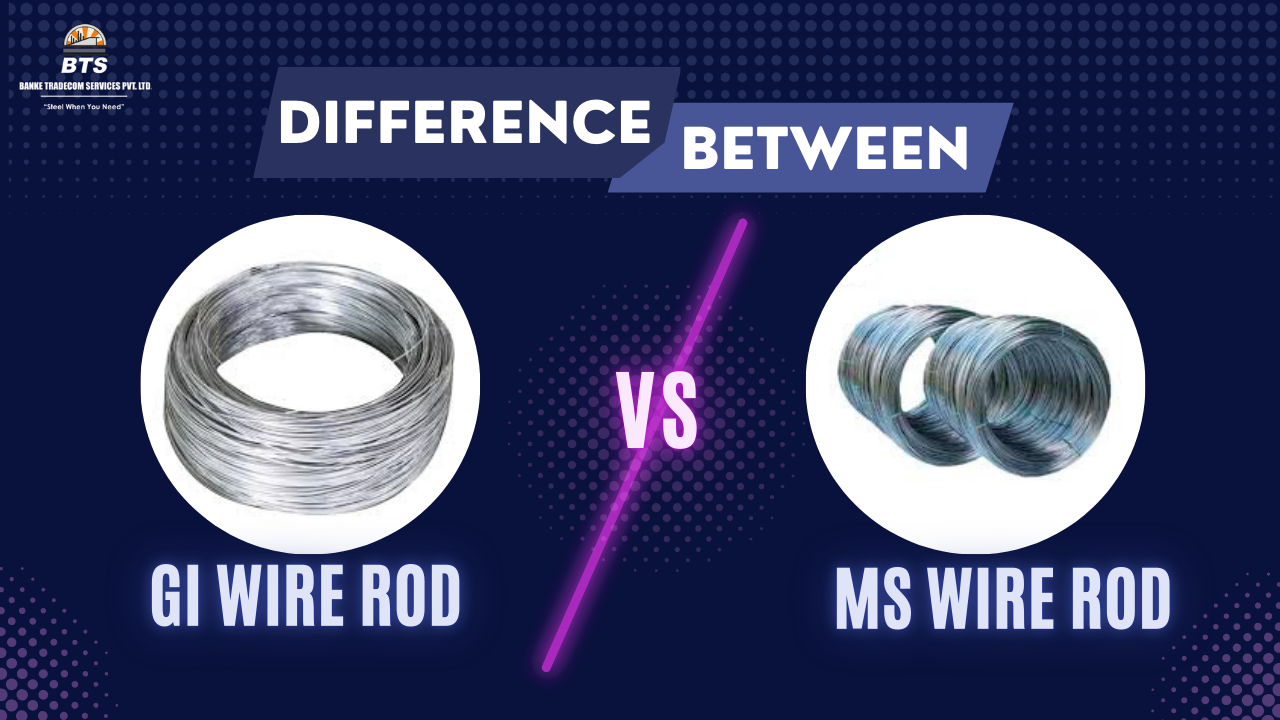
When planning a construction or manufacturing project, the choice of wire rod— GI Wire Rod vs. MS Wire Rod can significantly impact the performance and lifespan of the final product. In this blog, we’ll explore the features, GI Wire Rod vs. MS Wire Rod differences, and applications of GI wire rods and MS wire rods to help you make an informed choice.
What is GI Wire Rod?
GI (Galvanized Iron) wire rod is a steel wire rod coated with a layer of zinc through a galvanization process. This zinc coating protects the wire rod from rust and corrosion, making it ideal for outdoor and moisture-prone environments.
Key Features of GI Wire Rod:
- Corrosion Resistance: The zinc coating prevents rust, ensuring durability in harsh conditions.
- Durability: With enhanced strength, GI wire rods are long-lasting and reliable.
- Versatile Applications: Commonly used in fencing, electrical wiring, and agricultural settings.
- Low Maintenance: Requires little upkeep, reducing long-term costs.
Common Applications:
- Outdoor fencing and boundary walls.
- Electrical wiring and protective mesh.
- Reinforcement in concrete structures.
- Agricultural trellising and protective netting.
What is MS Wire Rod?
MS (Mild Steel) wire rod is made from low-carbon steel, offering excellent weldability and malleability. Unlike GI wire rods, MS wire rods lack a protective coating, making them more susceptible to corrosion but ideal for indoor and industrial uses.
Key Features of MS Wire Rod:
- Ductility: Highly malleable and easy to mold into various shapes.
- Weldability: Superior weldability for industrial applications.
- Cost-Effective: More affordable than GI wire rods.
- Requires Treatment: Prone to rust unless treated with coatings or paints.
Common Applications:
- Manufacturing nails, screws, and fasteners.
- Structural reinforcements for buildings.
- Automotive and machinery parts.
- Binding and packaging materials.
Detailed Comparison of GI Wire Rod vs. MS Wire Rod
| Aspect | GI Wire Rod | MS Wire Rod |
|---|---|---|
| Material Composition | Mild steel base with a zinc coating for corrosion protection. | Pure mild steel without any protective coating. |
| Resistance to Rust | Excellent resistance due to galvanization. | Poor resistance; prone to rust unless treated. |
| Weather Suitability | Ideal for humid, coastal, and rainy environments. | Best suited for dry or controlled indoor conditions. |
| Structural Strength | Strong and durable, especially for outdoor use. | Moderate strength; less resistant to wear in harsh climates. |
| Flexibility | Slightly less flexible due to the zinc layer. | Highly malleable and easy to bend. |
| Environmental Impact | Zinc coating offers recyclability but has a higher carbon footprint during production. | More eco-friendly if treated properly post-use. |
| Maintenance Requirements | Low maintenance; does not require frequent upkeep. | Needs regular painting or coating to avoid rusting. |
| Lifespan | 10–15 years or more, depending on exposure conditions. | Shorter lifespan unless maintained regularly. |
Which is Better for Specific Applications?
| Application | Recommended Wire Rod |
|---|---|
| Outdoor Fencing | GI wire rod, due to its rust-resistant properties. |
| Large-Scale Industrial Uses | MS wire rod, thanks to its affordability and weldability. |
| Construction in Coastal Areas | GI wire rod, as it withstands humid and salty environments better. |
| Automotive Parts | MS wire rod, because it can be easily shaped and welded. |
| Temporary Structures | MS wire rod, due to its low cost and ease of use. |
| Long-Term Outdoor Installations | GI wire rod, for its durability and maintenance-free nature. |
Frequently Asked Questions (FAQs)
- What is the lifespan of GI wire rods?
GI wire rods can last over 10–15 years with minimal maintenance, even in harsh environments. - Are MS wire rods suitable for outdoor use?
Yes, but they require protective coatings to prevent rusting. - Which is more affordable:GI Wire Rod vs. MS Wire Rod?
MS wire rods are more affordable due to their lack of zinc coating. - Can GI wire rods be welded?
Yes, but welding GI wire rods requires special techniques to handle the zinc coating. - Which industries commonly use GI wire rods?
Construction, agriculture, and electrical industries rely heavily on GI wire rods.
About us-
At BTS, we stand out as the leading steel distributor all over India. Our decades of experience, in-depth industry knowledge, and customer-first approach make us the preferred choice for all your steel requirements of various brands like SAIL, Tata Steel, JSW, Jindal, JSPL, etc. We proudly deliver PAN India, ensuring timely and reliable supply wherever you are.
📞 Call us now to get a quote!
📍 Location: Raipur (CG)
📞Phone: 07712292080 | 07415009930 | 07415009931
✉️Email: sales@banketrade.in | steel@banketrade.in
🌐Website: www.banketrade.in 🌐Blog Site– https://blog.banketrade.in/
Stay Connected with Us on